Showing posts with label Korean. Show all posts

Wednesday, June 30, 2010

Korean Grilled Chicken


Have you been wanting to try some Korean recipes but have been too busy/scared/lazy to go buy all the crazy ingredients?  I feel ya.  This recipe is for you!

This recipe is for chicken marinated in a Korean marinade.  All of the ingredients for the marinade are at my grocery store (except for the Asian pear...I just use a regular one).  And besides the marinating time, it is pretty quick to throw it all together.  Yes!  Oh yeah, and this is a sweet marinade...doesn't have the usual Korean kick (has no chili oil or gochujang).  


You can just eat the skewered chicken, as is, with a few sides.  It would be great over some rice and with some grilled veggies.  You could also incorporate them into a lettuce wrap, taco or pita pocket.  You could top with kimchi, gochujang dressing, or any of the toppings for Korean tacos.  Or just make a little extra marinade and reduce that down for a sauce.  


We just had our with grilled veggies and potatoes (which I blanched).  Dinner on a stick!  


Dakkochi (Korean Skewered Chicken)

1 pound chicken breast (cut into bite sized pieces)
3 cloves garlic (grated)
1 inch ginger (grated)
1/2 small onion (grated)
1/2 Asian pear (grated)
1/4 cup soy sauce
1/2 tablespoon sesame oil
1 tablespoon brown sugar
1 green onions (chopped)
1/4 teaspoon pepper

Mix everything in a freezer bag and marinate for at least an hour.

Skewer the chicken on wet skewers and set aside.

Strain the solids from the marinade and simmer the marinade until it thickens and becomes saucy, about 5-10 minutes.

Grill the chicken until cooked, about 5 minutes per side basting it with the marinade as you go.

(Servings: 4, Prep time: 90 min., Cook time: 10 min., Difficulty: Easy)

Wednesday, April 21, 2010

Kimchi Bokkeumbapa


The last Korean recipe for the week!  And I am very sad about that!  I hardly ever can't wait to make the same dish again, but that is the case for all the Korean dishes I have made this week.  This Kimchi bokkeumbapa translates directly to kimchi fried rice.  I think fried rice has kind of a negative rep.  I am pretty sure it is because all the ghetto Chinese take out comes with fried rice.  Why!?!  And why did I just call it ghetto?  Sorry!  

Fried rice, when made properly, is so delicious.  And also so sensible.  The texture is best when it is made with old rice.  If you have leftover rice, this meal take less than half an hour to make.  The importance of old rice is something I can confirm from making many bad fried rice dishes.  If it is made with fresh rice, the end result is too wet.  Back to fried rices bad rep, I also think fried rice has a bad rep because it is called "fried" rice.  But don't even worry about it, there is very little added oil in fried rice.  This particular recipe also has pork belly, but let's just ignore that.  Actually, my grocery store doesn't have pork belly, so I just used bacon.  SO amazing.  This dish is like bacon and eggs and Korean spicy goodness.  


Kimchi Bokkeumbapa

1 teaspoon sesame oil
1/4 cup pork belly (sliced) - samgyeopsal
1/4 cup onion (chopped)
1 cup cooked rice
1/4 cup kimchi
1 clove garlic (chopped)
1 tablespoon of gochujang
1 tablespoon of soy sauce
1 green onion (sliced)
1 green chili (sliced)
1 teaspoon toasted sesame seeds
1 egg (fried, optional)

Heat the oil in a pan. Add the pork belly and onion and saute until the pork belly turns white. Add the rice and let it cook until it starts to brown, flip it and do the same to the other side. Mix in the kimchi, garlic, gochujang and soy sauce and cook for 5 minutes.

Serve garnished with the sliced green onions, green chilies and toasted sesame seeds and top with a fried egg.

(Servings: 1, Prep time: 10 min., Cook time: 15 min., Difficulty: Easy)

Tuesday, April 20, 2010

Bibimbap


Today is 4.20.  Before living in Boulder, this day was never really a thing.  But it is here.  Mainly, those punks take my spot on the bus on 4/20!  Rude!  Jk.  It's fine.  But, seriously, it was so crazy today on my way home.  My bus home was 30 minutes late and the bus stop was totally packed with new and mysterious people.  People with walking sticks decorated with feathers, bells, and other random objects.

Today is similar to coming home from work during a huge sporting event.  Where no one seems to have cars.  No adults (very few anyways).  Or children.  Just a bunch of punks.  Relaxed punks.  And they are nice punks.  My favorite thing that happened, was when I was waiting at a cross walk.  This friendly guy came up next to me on his little bike for tricks.  He smiled at me and said, "were you just at the field?"  And I laughed.  Does it look like I was just at the field?  Haha.  I guess I look way more hardcore than I am.  Figures.  Little did he know, I was just trying to get home to make me some Bibimbap!

Anyways, enough about the cannibis culture.  Whatever that even means.  We are continuing on with the Korean theme this week.  This was another delicious and easy dish.  I can't wait to try more Korean meats and dishes.  I have loved them all.  Bibimbap is really simple. It is just steamed rice with a bunch of veggies and meat.  Great for leftovers.  It is served with them all separated like the picture above.  Before eating, you just mix everything up.  Like this.


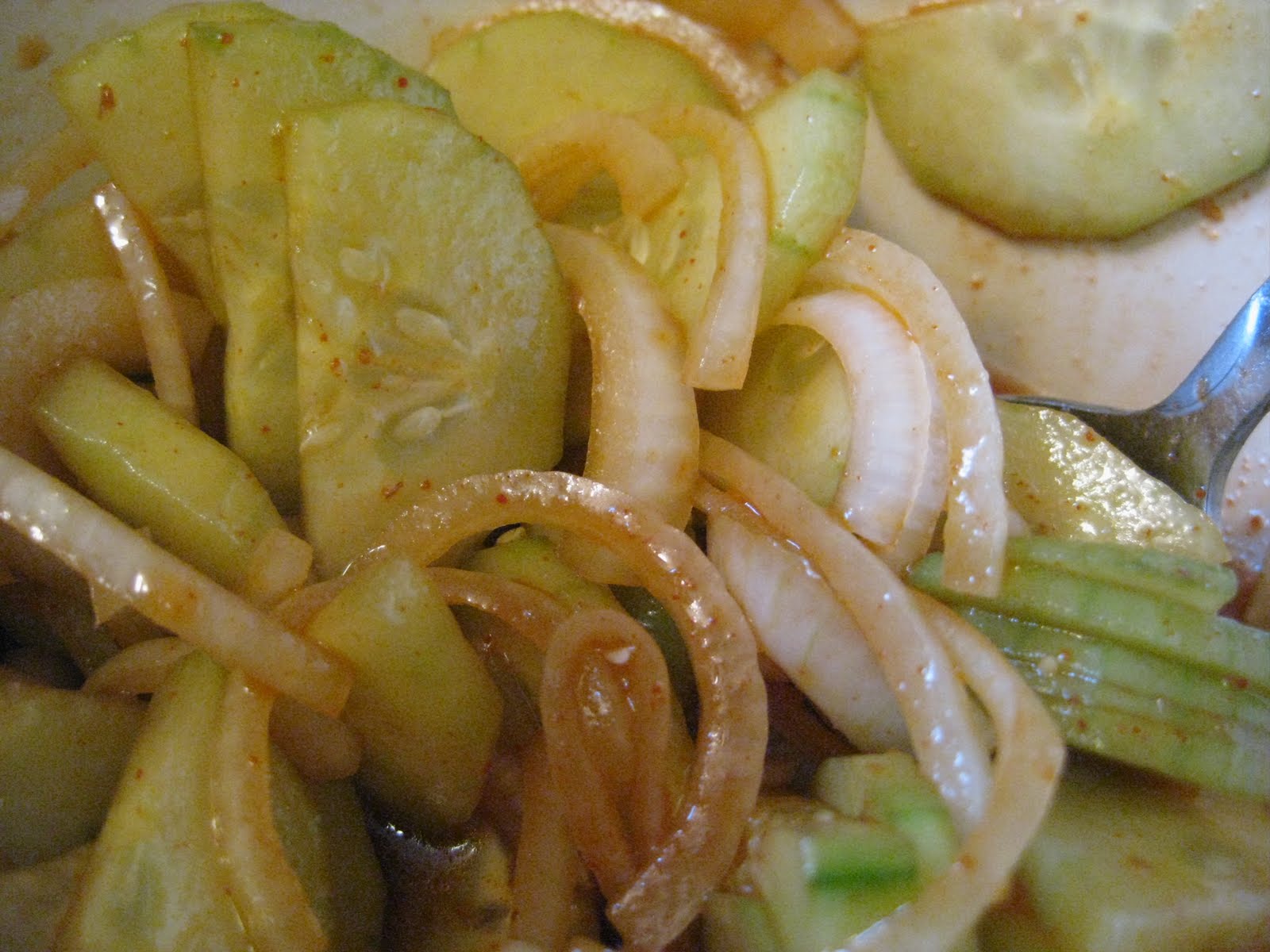
The runny yolk is key.  So yummy.  I also made Oi Moochim, which is just like seasoned cucumbers.  Also delicious.


Bibimbap
by Jen Lee via Food Network

Bibimbap (BEE-beem-bop): One of the most popular dishes in Korean cuisine, bibimbap is a nutritious rice dish of steamed rice and pre-cooked vegetables (usually spinach, bean sprouts, carrots, mushrooms, egg and lettuce. It can also contain ground beef but can be ordered without meat. Dolsot bibimbap is the same dish served in a hot stone pot (the pot is pre-heated in oven) to make the rice on the bottom crunchy and to keep the dish hot for a longer time. Bulgogi (BULL-go-ghee): Literally meaning "fire meat", bulgogi is thinly sliced, usually rib-eye or sirloin, marinated grilled meat. Gochuchang (GOH-choo-jang) paste: spicy red pepper paste sold either in glass jars or plastic containers that can be purchased at any Korean or Asian food market.
______________________________________

Steamed white rice
Bulgogi
1 carrot, julienned
Cooked bean sprouts, sauteed in a little sesame oil or peanut oil and seasoned with salt
Cooked spinach, sauteed in a little sesame or peanut oil and seasoned with salt
4 shiitake mushrooms, thinly sliced and sauteed in peanut oil and seasoned with salt
1 egg, cooked over easy
1 tablespoon sesame seeds
1 tablespoon dark sesame oil
Soy sauce, to taste
Gochuchang Paste, recipe follows

*Cook's Note: This can be done in a regular bowl or a hot stone bowl. If it's in a hot stone bowl, the rice becomes crunchy because it's still cooking.

Put cooked rice in large slightly shallow bowl. Place bulgogi (with juices from cooked meat) and veggies on top of rice but place separately so you can see each ingredient beautifully placed on rice. Put egg on top. Sprinkle with sesame seeds and drizzle with sesame oil and soy sauce.

When ready to eat, mix all ingredients together with some gochuchang paste, to taste. The bibimpap should be moist and not dry. Add more sesame oil and gochuchang paste, to taste.

Gochuchang Paste (seasoned red pepper paste):

4 tablespoons gochuchang (available at Korean grocers)
1 tablespoon sugar
1 tablespoon sesame seeds
2 teaspoons sesame oil

Combine all ingredients in a small bowl. Mix well.

(Servings:  varies, Prep time:  30 hour, Cook time:  1 hour, Difficulty:  Intermediate)

Monday, April 19, 2010

Korean Tacos


I made a double batch of the Bulgogi (Korean BBQ beef) over the weekend.  I cooked it all up because I don't think the beef should sit in the marinade for more than one day.  The leftover bulgogi made this Korean taco meal very easy.  And I REALLLY liked these tacos.  If I had a favorite tag, I would use it.  I am going to make one.  


The tacos are made up of the Bulgogi, a Korean salsa, and a few simple toppings.  I had already cooked beef, that I just warmed up.  However, if you marinate the meat the night before, cooking it up only takes about 5 minutes because it is so thinly sliced.  The toppings take just a few minutes to chop and mix up.  One is an onion and cilantro relish (basically just onion, cilantro and lime juice...delicious).  The other is lettuce dressed in a quick Korean dressing.  The salsa takes about an hour.  I made it right before we ate it, so it was still warm.  I thought I would prefer it cold, but when it was in the taco, it was good warm too.


Korean tacos like these are becoming popular, especially in California.  I have heard lots and lots about them.  But never had them.  We don't have Korean taco vans in Boulder.  That I know of.  Please let me know if there are any in a 50 mile radius of me.

I love that these tacos don't have cheese.  I am sick of cheese.  I ate too much of it over the past month.  And I need a break.


Great for those of you suffering from seasonal allergies and who have lost your sense of taste.  Scot could kind of taste this meal!


Korean Tacos

12 small tortillas
1 lb Bulgogi (Korean BBQ beef)
1 cup Korean style salsa roja (recipe below)
1 cup onion and cilantro relish (recipe below)
2 cups shredded lettuce in a Korean sesame vinaigrette
6 tablespoons sesame seeds (toasted and crushed)

Assemble tacos.

(Servings: 4, Difficulty: Intermediate)
___________________________________
Korean Style Salsa Roja

1/2 pound plum tomatoes
1/4 pound tomatillos (husked and washed)
1 cup water
1 ounce (about 20) dried chilies de arbol (toasted)
1/2 cup onion (chopped)
1 tablespoon garlic (grated)
1 tablespoon ginger (grated)
2 tablespoons gochujang
1 tablespoon sesame oil
1 tablespoon sesame seeds (toasted and crushed)

Roast the tomatoes and tomatillos until charred on all sides, about 10-12 minutes.

Place the tomatoes, tomatillos, water, chiles de arbol and onion into a sauce pan, bring to a boil and simmer until the onions are tender, about 20-30 minutes.

Drain the water reserving it.

Place everything except the sesame seeds into a food processor or a blender and puree adding some of the reserved liquid if necessary.

Mix in the toasted and crushed sesame seeds.

(Servings: 2-3 cups, Prep time: 10 min., Cook time: 45 min., Difficulty: Easy)
___________________________________
Onion and Cilantro Relish

1 sweet onion (chopped)
1 bunch green onions (sliced, optional)
1 handful cilantro (chopped)
1/2 lime (juice)

Mix everything.

(Servings: 4, Prep time: 5 min., Cook time: 0 min., Difficulty: Easy)
___________________________________
Shredded Romaine in a Korean Sesame Vinaigrette

1 tablespoon sesame oil
1/2 lime (juice)
1 tablespoon soy sauce
1 tablespoon gochugaru (Korean chili powder)
1 tablespoon sesame seeds (toasted)
1/2 head romaine lettuce (shredded)

Mix the dressing and toss with the lettuce.

(Servings: 4, Prep time: 5 min., Cook time: 0 min., Difficulty: Easy)

Sunday, April 18, 2010

Bulgogi


I was SO excited to dive into a few Korean recipes I have been wanting to try.  The first, is Bulgogi.  It is Korean BBQ made with rib-eye steak (or sirloin).  The marinade has a million ingredients in it.  To the point where I made many extreme approximations when measuring.  I kept thinking it couldn't matter that much with so many ingredients.  However, all the ingredients are easily accessible and I love that.  But I am also kind of in love with going to the Asian market in town, so I don't mind having an excuse to go ever.

I marinated overnight.  The marinade was super cool looking because some sort of chemical reaction happens when you add in the Sprite.


The meat was very tender and had tons of flavor.  I really liked it.  The meat is difficult to grill, because it is sliced so thinly.  The recipe says to grill but when I watched the video (linked in recipe reference), Jen Lee said the meat should be cooked in a pan and boiled in the marinade.  I tried both ways and both taste great.

We ate this with some white rice, kimchi (bought at asian market), and some gochuchang paste (gochuchang, sugar, and sesame oil).


We also ate with some friends who made some yummy spring rolls.


Some people prefer their spring rolls as squares.


Some people prefer to put bratwurst in spring rolls.  That's fine.


Bulgogi
by Jen Lee via Food Network

1 pound rib-eye
Marinade:
1/2 cup soy sauce
1 Korean pear or Asian pear, grated with juices
2 tablespoons finely chopped garlic
1/2 small white onion, grated or sliced
1 tablespoon grated fresh ginger
2 tablespoons light brown sugar
1 tablespoon honey
2 tablespoons sesame seeds, toasted
2 tablespoons toasted sesame oil
1 tablespoon ground red pepper
1/4 teaspoon ground black pepper
2 green onions, thinly sliced
1 (20-ounce) bottle lemon-lime soda, optional (recommended: Sprite or 7-Up)

Place rib-eye in freezer for about 30 minutes so that it is easier to thinly slice. When partially frozen, remove from freezer and thinly slice. Set aside.

Whisk together all the marinade ingredients in a large baking dish. Add the thinly sliced beef and turn to coat. Cover and refrigerate for at least 1 hour or overnight; it is best if marinated overnight.

Heat grill to high. Remove beef from marinade and grill for 1 to 2 minutes per side. Remove from heat and set aside until ready to compile Bibimbap.

(Servings: 4 servings, Prep time: 2 hrs-overnight, Cook time: 15 min., Difficulty: Easy)

Sunday, February 7, 2010

Spicy Korean Ribs


Yum. I found this recipe from Seasaltwithfood and I just had to switch my Superbowl app menu to include these. They were delicious and spicy. They were also easy to make. Just marinate and throw in the oven. Although, they were pretty spicy. Scot and I really like spicy food and we needed some milk after a few. Might have had something to do with the Jalapeno Poppers that we also had with them. The ribs were also really sweet.


Spicy Pork Ribs-Dwaeji Galbi

adapted from Eating Korean by Cecilia Hae-Jin Lee via Seasaltwithfood


2 1/2 lbs Pork Back Ribs

1 (1/2-inch) Piece Ginger Root, minced

1 Small Garlic Clove, finely chopped

1/2 Cup Chili Paste (Korean)

1/4 Cup Korean Malt Syrup (mool yut)/(Substitute with Honey)

1/4 Sugar

1 Tbsp Soy Sauce

1 1/2 Tbsp Sesame Oil

1/2 tsp Black Pepper


Separate the ribs by cutting meat between the bones. Place in a large bowl. Combine ginger, garlic, chili paste, malt syrup (or honey), sugar, soy sauce, sesame oil, and black pepper in a large bowl. Rub marinate generously over the meat. Cover and refrigerate overnight.


Preheat oven to 350°F. Place the spare ribs on a large roasting tray and reserve the marinate sauce. Boil the marinate sauce and let simmer for about 5 minutes, or until the sauce has thicken slightly.


Roast the ribs for about 30 minutes and baste the meat with marinate sauce. Continue to roast for about 15 minutes. Serve warm.


(Servings: 4, Prep time: overnight, Cook time: 50 min., Difficulty: Easy)


Printable Version